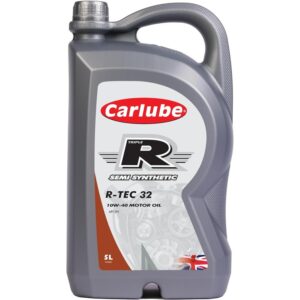
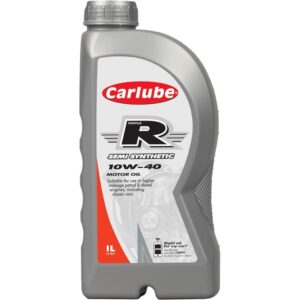
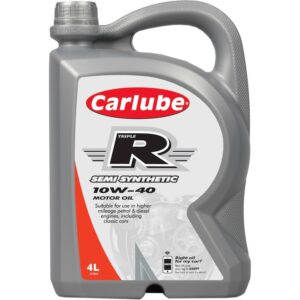
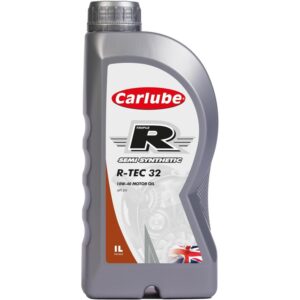
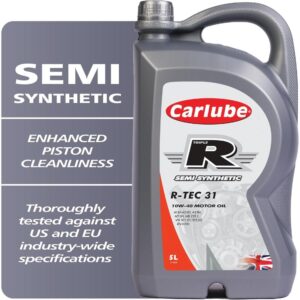
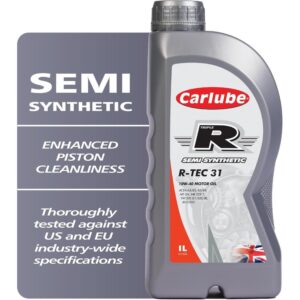
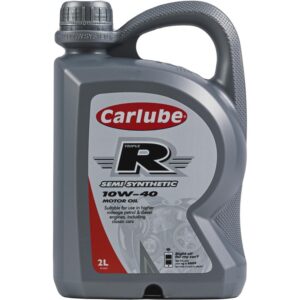
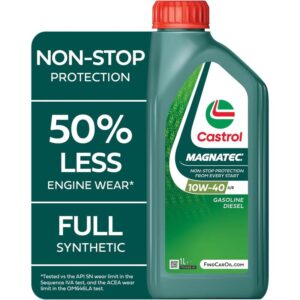
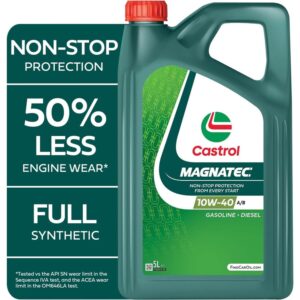
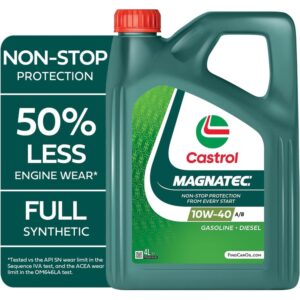
10W-40 Engine Oil – Finding the Right Stuff for Your Motor

Let’s talk 10W−40 engine oil. If you’re driving something that’s not absolutely brand new – maybe a trusty older model or something with a few miles on the clock – chances are this grade of oil might be just the ticket. It’s a proper workhorse, this stuff, been keeping engines happy on British roads for donkey’s years.
We know choosing the right engine oil can seem a bit baffling with all the numbers and codes plastered on the bottles. Is 10W−40 right for your motor? Let’s break it down, nice and simple.
What’s the deal with 10W−40 anyway?
Basically, those numbers tell you how thick the oil is (its viscosity) and how well it flows at different temperatures. This is dead important for protecting your engine, whether it’s a frosty morning start or you’re sat in traffic on the M25.
➡️ W stands for Winter, easy peasy. 10 bit tells you how easily the oil flows when it’s cold. Lower numbers mean it flows better. So, 10W is pretty decent at getting around your engine sharpish when you first turn the key on a chilly one, much better than older, thicker oils that could leave parts briefly unprotected.
➡️ 40 – this number shows how thick the oil stays when your engine’s up to temperature (around 100°C). 40 means it keeps a good, strong protective film between moving parts even when the engine’s working hard – think motorway driving or stop-start city crawls.
➡️ Essentially, 10W−40 is a multi-grade oil. It’s designed to cope well with the typical range of temperatures we get here in the UK, offering a good balance.
Whose cars usually take 10W−40?
While the very latest cars often need thinner oils (like 5W−30 or even thinner!), 10W−40 is still spot-on for a massive number of vehicles you see every day, especially:
✅ Older petrol and diesel cars. Loads of popular cars made from the late 80s right through to the mid-2000s were designed for 10W−40. We’re talking countless Fords, Vauxhalls, Rovers, Peugeots, Renaults, VWs, and plenty of Japanese models from that era.
✅ Cars with higher mileage. As engines get older, tiny gaps between parts can increase. Sometimes, a slightly thicker oil like 10W−40 can help maintain good oil pressure and maybe even reduce a bit of oil consumption compared to thinner stuff. (But – and this is important – always check your handbook first!).
✅ Some vans and light commercials. Particularly older models might specify 10W−40.
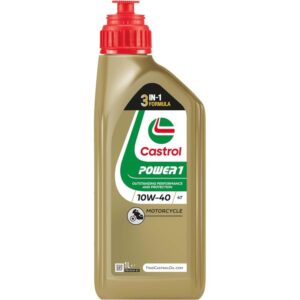
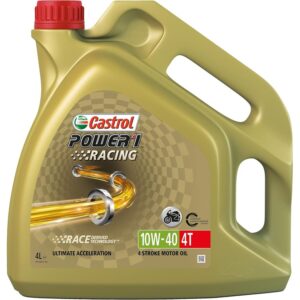
✅ Motorbikes. It’s a really common grade for bikes. Heads up though: You must use bike-specific 10W−40 (it’ll often say JASO MA or MA2 on the bottle). Car oil has friction modifiers that can make a bike’s wet clutch slip – not what you want!
Now, Here’s the Golden Rule – Check Your Car’s Handbook!
Honestly, this is the most important bit. It will tell you exactly which viscosity grade (like 10W−40) and, just as importantly, which performance specification your engine needs. Chucking the wrong stuff in can cause extra wear, hurt performance, or worse. Don’t guess – check the book!
What are the perks of using the right 10W−40?
If your car’s handbook says 10W−40 is the stuff, using a decent quality one gives you:
✔️ Keeps things nicely lubricated when hot, but still flows well enough when cold. A good balance.
✔️ Helps stop metal bits grinding against each other, especially during those first few crucial seconds after starting up. Helps the engine last longer.
✔️ Good 10W−40 oils have detergents that stop sludge and gunk building up, keeping the engine’s insides cleaner.
✔️ Particularly the semi-synthetic ones, 10W−40 often gives you excellent protection without costing the earth compared to some top-end fully synthetic oils.
✔️ Suitable for lots of different petrol and diesel engines (as long as the spec matches!) for typical UK driving.
Understanding the specs – beyond Just 10W−40 (API & ACEA)
Right, the nitty-gritty. Viscosity is only half the story. You’ll also see codes like ‘API SN’ or ‘ACEA A3/B4’. These are basically performance standards – think of them like a quality mark for what the oil can do.
✅ API (American Petroleum Institute) – mostly seen on oils aimed at American and Asian cars. ‘S’ specs (like SL, SM, SN) are for petrol, ‘C’ specs for diesel.
✅ ACEA (Association des Constructeurs Européens d’Automobiles) – the European standard, often seen as tougher. ‘A/B’ specs (like A3/B3, A3/B4) are generally for standard petrol and diesel engines. ‘C’ specs are for modern engines with diesel particulate filters (DPFs) – usually not relevant for typical 10W−40 applications.
The key thing? You MUST match the spec in your handbook. If your Vauxhall Astra handbook from 2002 says it needs ACEA A3/B4, then make sure the 10W−40 bottle you buy says ACEA A3/B4 on it. Simple as that. Using the wrong spec, even if the viscosity is right, isn’t doing your engine any favours.
Semi-synthetic or fully synthetic 10W−40?
Most 10W−40 oil you’ll find is semi-synthetic. This means it’s a blend of traditional mineral oil and man-made synthetic oil. It gives you a good dollop of the benefits of synthetics (like better stability and cleaning) at a more wallet-friendly price than fully synthetic. It’s often the sweet spot for the types of cars that use 10W−40. You can get fully synthetic 10W−40, which offers the absolute best protection in this grade, but it’s less common and often overkill unless specified.
How does the right 10W−40 help you out?
✔️ A good 10W−40 fights wear and tear, helping it last longer.
✔️ 10W helps get oil flowing quickly to quieten things down and protect parts from the off.
✔️ 40 ensures it protects properly even when the engine’s hot and bothered.
✔️ The additives in modern 10W−40 help prevent sludge.
Basically, using the right oil gives you peace of mind that your engine’s being looked after properly.
Ready to find the right 10W−40?
We’ve got a great selection of quality 10W−40 engine oils right here from brands you know and trust. Whatever your motor needs, as long as the handbook says 10W−40 and you match the spec, we’ve likely got you covered.
Remember that handbook check (yes, mentioning it again – it really is that important!). Getting the oil right is one of the simplest, most effective ways to look after your car and keep it running smoothly for years to come.
Have a browse below, find the spec you need, and get your engine sorted!
Showing 1–28 of 55 results