

Product details
Car ramps for easy vehicle maintenance and safe lifting
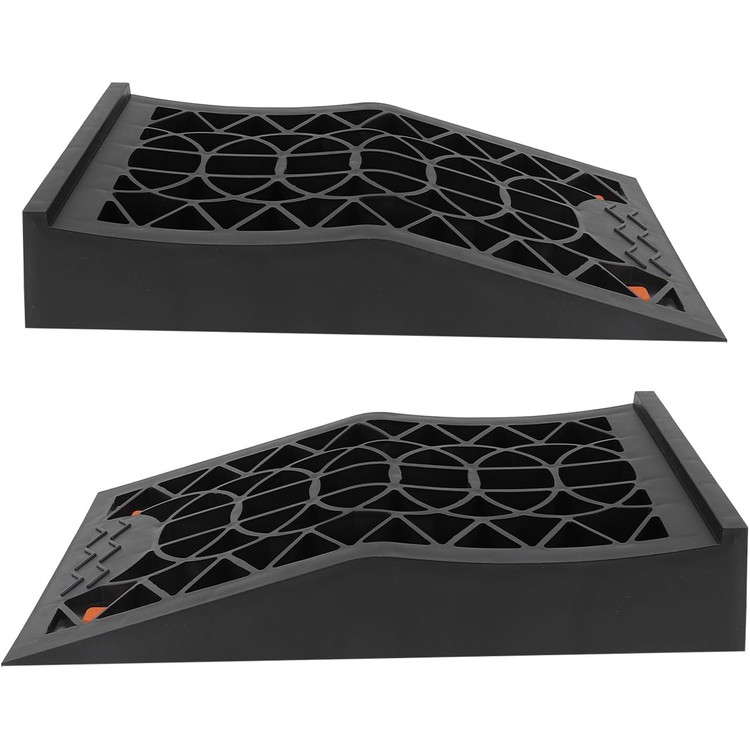
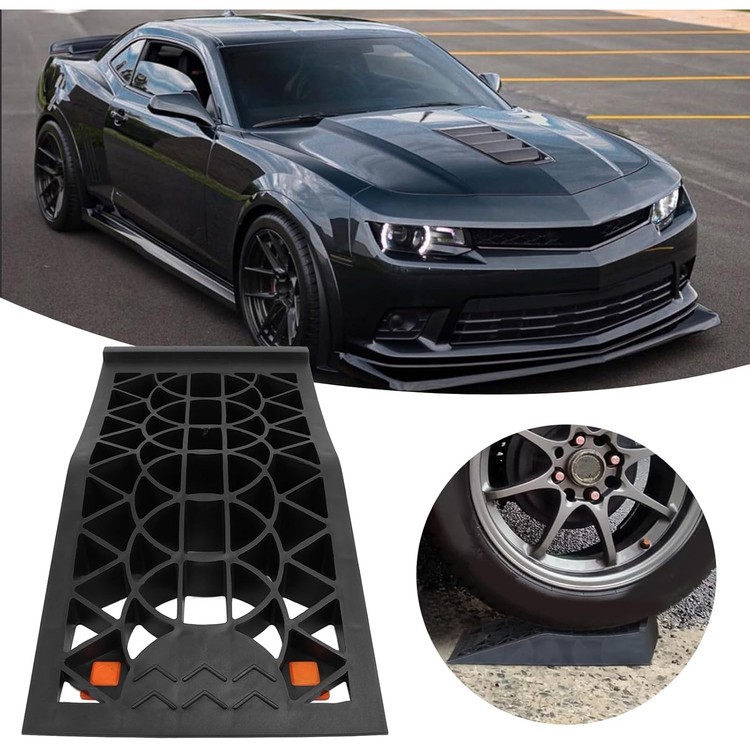
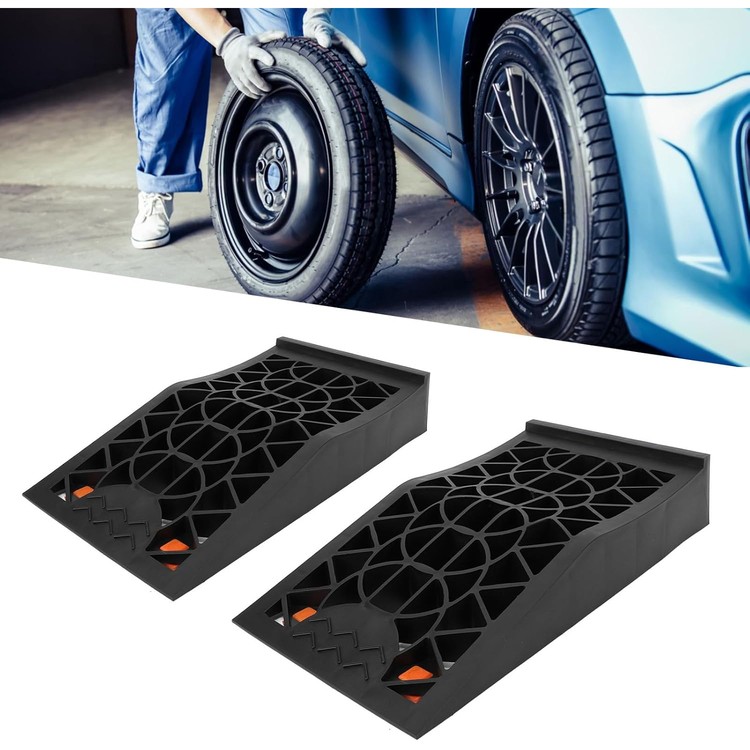
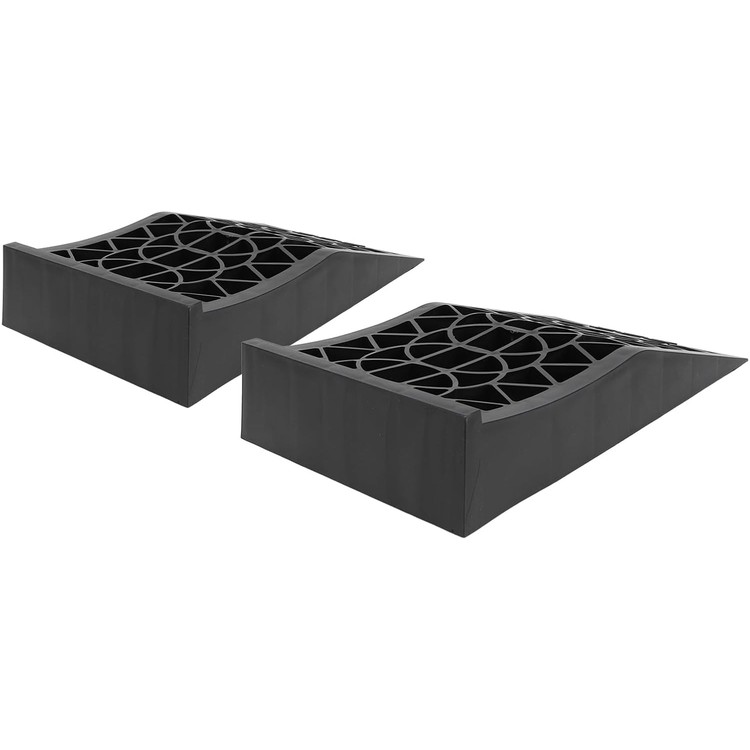
These low-profile car ramps make routine maintenance less of a faff and a lot safer. Moulded from impact-resistant polypropylene, they give low-chassis cars around 62 millimetres (2.44 inches) of lift — enough room to slide a hydraulic floor jack underneath or clamber under for an oil change. They feel properly solid under both foot and tyre, none of that wobbly, twisty rubbish you sometimes get.
Built tough and safe
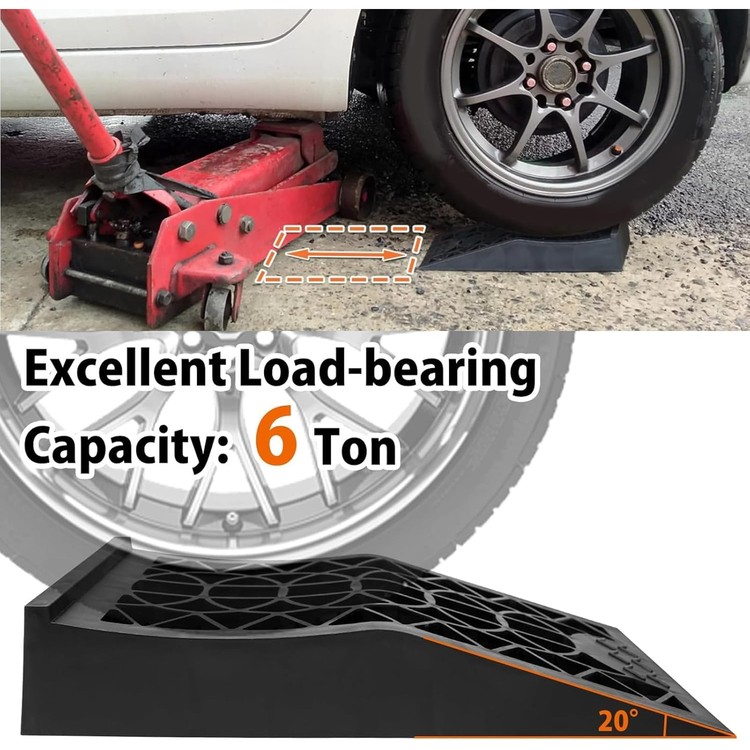
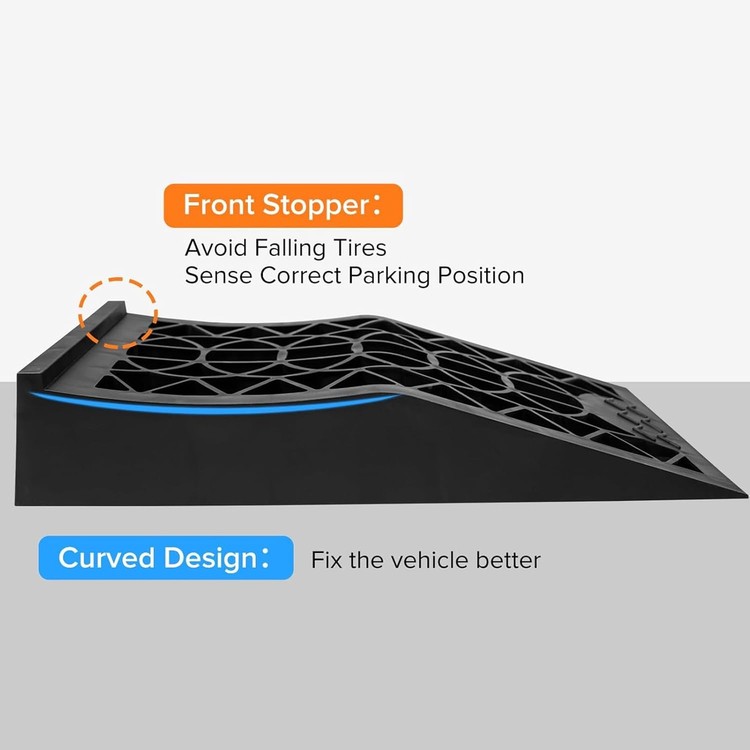
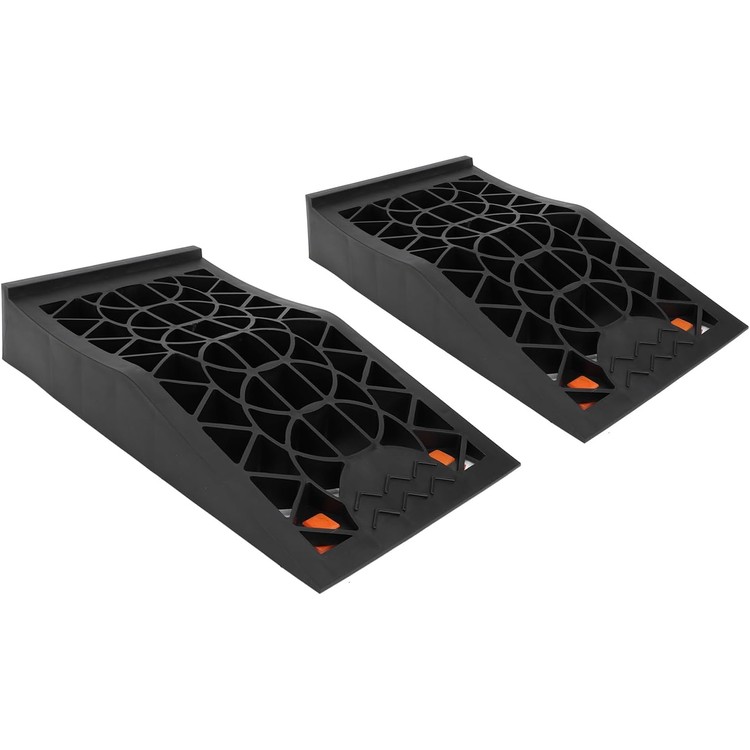
The ramps feature a textured, anti-slip surface and a gently curved wheel cradle to keep the tyre settled while the car sits on them. Drainage channels run across the surface so water doesn’t pool — handy if you’re working outside or straight after a wash, as tyres are less likely to slip. With a load rating of about 6 tonne per pair (≈13,200 lb), they’ll cope with most family cars and many modified vehicles you’ll find in a home garage or small workshop.
Practical details and specs
- Material – durable polypropylene that stands up to knocks and the weather.
- Lift height – ≈62 millimetres (2.44 inches), ideal for lowered cars and low-clearance models.
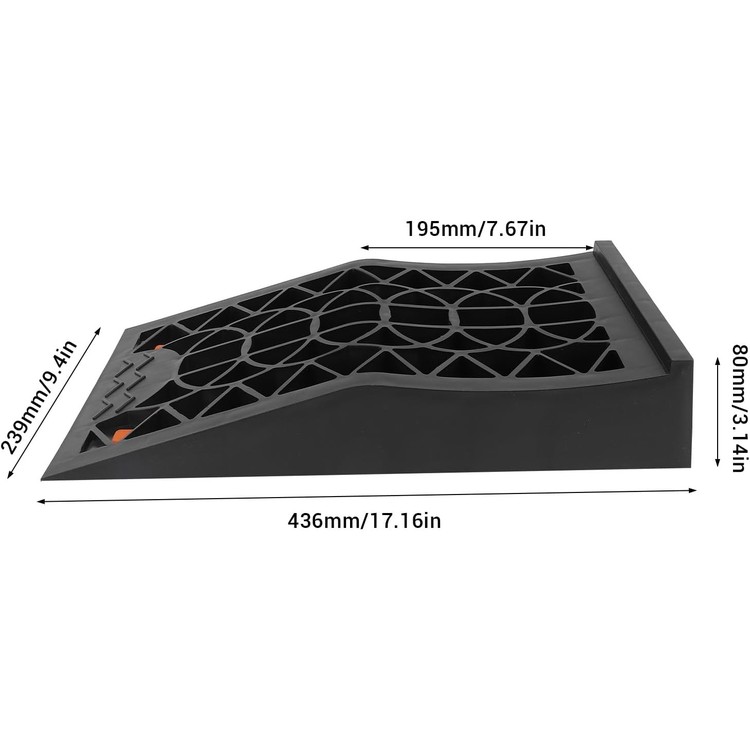
- Dimensions – 440 x 240 x 80 mm (≈17.32 x 9.45 x 3.14 inches); compact enough to stash in the garage or the boot.
- Slope – roughly 20° for an easy climb without scraping the bumper.
- Load rating – approx. 6 tonne per pair, suitable for most passenger cars.
Who they suit and common uses
These ramps are perfect for anyone wanting a simple, robust way to raise low-clearance cars for maintenance: oil changes, brake checks, fitting a jack or getting under side skirts. They’re great in a home garage, for weekend tinkering, or as a quick fix in a professional bay where a full lift isn’t handy. Bear in mind they’re not a substitute for axle stands if you’re doing heavy-duty work that requires the car fully supported off its wheels for long periods — use stands in addition where needed.
Helpful notes before you buy
As with any ramp, make sure the tyres and ramp surfaces are clean and the ramps sit on level, stable ground. Very low sports cars or vehicles with unusual bumper profiles might need a clearance check before you drive up. If you’re unsure, measure your vehicle’s approach angle and bumper clearance first — better safe than sorry.
All in all, these ramps strike a tidy balance of portability, strength and practicality. No more awkward jack angles or scraping the front bumper — they make everyday maintenance a proper doddle.