Windscreen wipers are a vital part of every car, particularly when the weather turns wet. They ensure clear visibility through the windscreen, enhancing driving safety. Nonetheless, as time passes, they may accumulate dirt, dust, and debris, potentially diminishing their effectiveness and even leading to scratches on the windscreen. Accordingly, routinely cleaning the wiper blades is essential for ensuring they perform at their best and for preventing any damage to the car’s windscreen.
Why it’s Important to Clean Your Wiper Blades Regularly
Many drivers disregard the importance of cleaning their wiper blades, wrongly assuming that they only need replacing once they cease to function properly. However, neglecting your windscreen wipers can result in a range of issues that compromise both safety and visibility. Here’s why routine cleaning is so crucial:
- Improved visibility and safety
Dirt, dust, and grime tend to accumulate on wiper blades, leading to streaks, skipping or smearing on the windscreen. This impairs visibility, particularly during heavy rain or snow, thereby increasing the likelihood of accidents. By keeping your windscreen wipers clean on a regular basis, you ensure an unobstructed view of the road ahead. - Prolongs wiper blade lifespan
Regularly replacing your windscreen wiper blades can prove costly. Meanwhile, a consistent cleaning regimen helps to prevent the rubber from deteriorating due to the accumulation of grime, UV exposure, and other environmental pollutants, thereby extending their lifespan. - Prevents windscreen damage
Soiled wiper blades can gather tiny particles such as sand, grit and debris, which over time might scratch the windscreen. Keeping the blades clean helps to prevent this abrasive wear and safeguards your glass from unnecessary damage. - Reduces unwanted noise and skipping
If your windscreen wipers emit a squeaking or chattering sound, it may be caused by a build-up of dirt or the rubber becoming stiff. Cleaning them can restore their suppleness and ensure a smooth sweep across your windscreen, thereby eliminating those bothersome noises. - Saves money on repairs and replacements
Regular cleaning of your wiper blades not only reduces the need for frequent replacements, but also minimises the risk of windscreen scratches that could result in expensive repairs. It’s a straightforward maintenance routine that ultimately saves you money.
Cleaning Your Wiper Blades: Step by Step
Clean windscreen wipers are crucial for ensuring clear visibility whilst driving. Over time, a build-up of grime can reduce the effectiveness of the blades. Regular cleaning not only extends their lifespan but also ensures they perform at their best when needed. Follow these straightforward steps to keep your windscreen spotless and your journey safe.
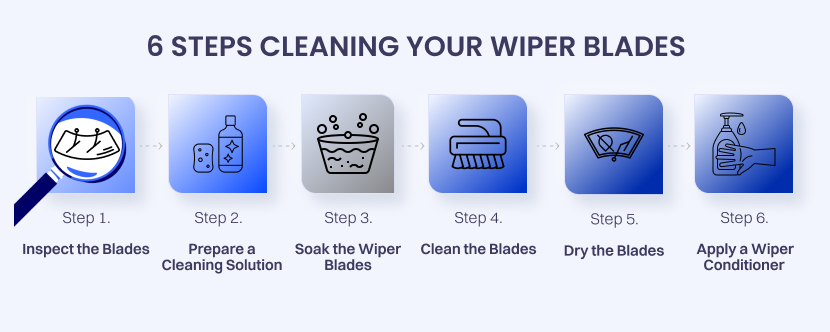
- Inspect the Blades
Before you begin cleaning, inspect your wipers thoroughly for any cracks, tears, or frayed edges. Should you spot any damage, have them replaced without delay, as impaired blades won’t clear your windscreen properly and could compromise your visibility. - Prepare a Cleaning Solution
Mix some warm water with a few drops of washing-up liquid, or use a specialised wiper cleaner. Steer clear of any products containing vinegar or ammonia, as they can dry out the rubber and eventually lead to cracking. - Soak the Wiper Blades
Raise the wipers from the windscreen and let them soak in the cleaning solution for roughly 5 to 10 minutes. This will help to dislodge any accumulated grime and dirt. - Clean the Blades
After soaking, use a clean cloth or sponge to wipe down the blades, working from the base to the tip. Be gentle and avoid applying excessive pressure to prevent damaging the rubber. Rinse the blades with clean water to remove any remaining cleaning solution. - Dry the Blades
Thoroughly dry the blades using a soft cloth or microfiber towel. Make sure not to dry them in direct sunlight or close to heat sources, as too much heat may cause the rubber to crack. - Apply a Wiper Conditioner
To prolong the life of your wiper blades, consider applying a specialised rubber conditioner. This will help keep them flexible, preventing them from drying out and deteriorating too early.
Conclusion
Regular cleaning and upkeep of your windscreen wiper blades will keep them in optimal condition, extend their lifespan, and ensure clear visibility whilst driving. Neglecting this straightforward routine can result in diminished performance, potential windscreen damage, and avoidable replacement costs.
To maintain your wiper blades effectively:
- Clean them at least once a month to prevent streaking and smearing.
- Inspect for cracks or wear and replace damaged blades immediately.
- Use a specialised wiper cleaner or rubber conditioner for long-lasting performance.
By following these steps, you not only improve your road safety but also sidestep expensive repairs. Take a few minutes today to inspect your wipers and ensure they work at their best in every weather condition.
FAQs
Can I clean my windscreen wiper blades with vinegar?
Yes, you can clean your windscreen wiper blades with vinegar, but make sure you dilute it with water to prevent any damage to the rubber. Vinegar acts as a natural cleaner that effectively removes grime and helps maintain the flexibility of your blades.
Can I clean wiper blades with WD40?
It is not advisable to use WD-40 for cleaning wiper blades, as it is designed as a lubricant rather than a cleaning agent. Using it may leave an oily residue, resulting in streaks on your windscreen and potentially degrading the rubber over time.
What is the best way to clean windscreen wiper blades?
For optimal results, it’s advisable to use a specialised windscreen wiper cleaner or isopropyl alcohol. These products effectively remove the dust, dirt, and debris that accumulate on the blades over time. Avoid harsh chemicals like bleach, ammonia, or vinegar, as these can damage the rubber and shorten the wipers’ lifespan.