
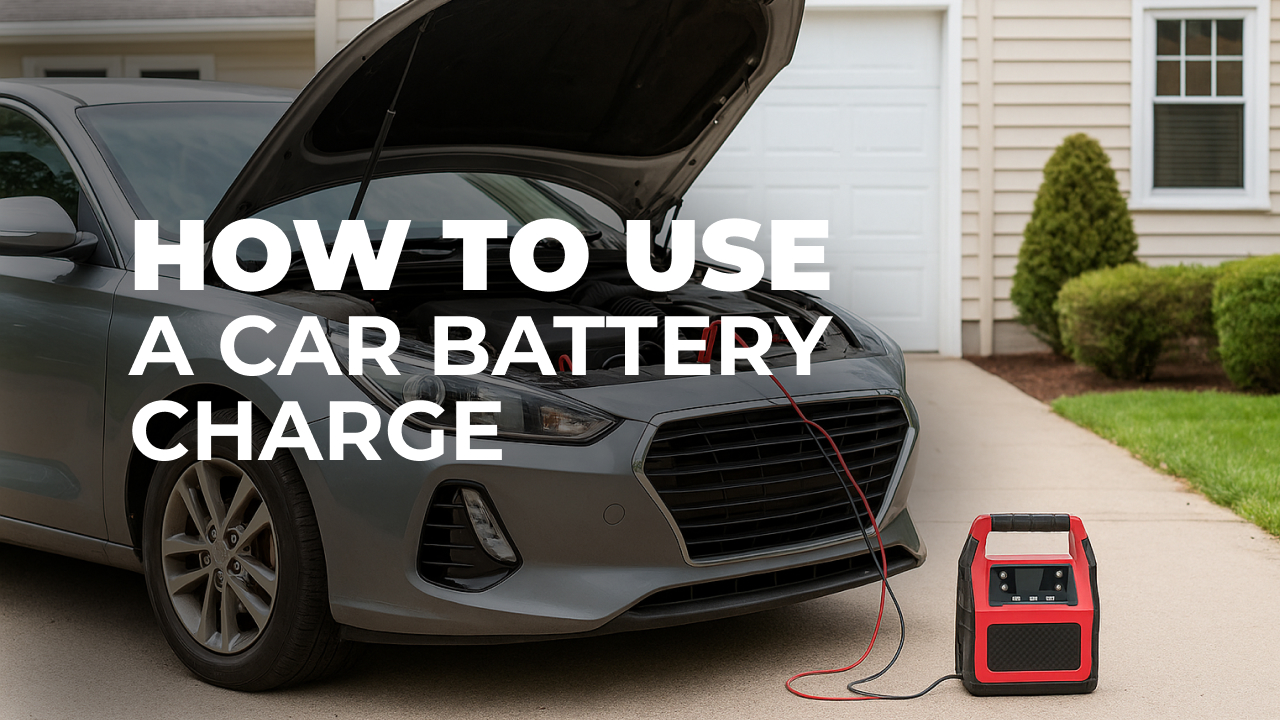
Let’s be honest, most of us have faced the soul-destroying moment when you turn the ignition and are greeted not by a roaring engine, but by a pathetic series of clicks – the automotive equivalent of a flatlining heart monitor. If you’re anything like me, you’ll have discovered, probably in the rain and at the most inconvenient hour possible, that you’ve not the faintest clue how to use a battery charger. So, in the noble spirit of “I suffered so you don’t have to,” here’s the lowdown, peppered with actual know-how, expert tips, and a dash of common sense (which, as we know, isn’t all that common).
Why and When You’ll Need a Battery Charger
Let’s set the scene: You nip out for milk, forget the headlights, come back the next morning, and your car’s deader than last week’s lettuce. Or perhaps you’ve parked up for winter, only for your pride and joy to sulk and refuse to start in January. Jump leads might get you moving in a pinch, but that’s like giving someone a shot of espresso when they really need a good night’s sleep – not a proper fix. If you actually care about your car (or at least hate waiting for the AA man), you need to show your battery some love with a proper charger.
Modern motors are stuffed to the gills with electronics, all quietly nibbling away at your battery even when the car’s doing its best impression of a garden ornament. If you’re only popping to the shops and back, or worse, leaving the car to gather dust while you watch box sets, your alternator simply isn’t getting a chance to do its job. According to people who spend their lives testing these things (cheers, Interstate Batteries), a car battery can give up the ghost in as little as four weeks if left alone – which, let’s face it, is about as long as it takes to forget where you parked it.
The boffins say you should run your engine for half an hour a week, but who’s got the time? If you can’t be bothered – or if you’ve got better things to do – just plug in a battery charger now and then. A smart trickle charger is like a personal trainer for your battery: keeps it ticking over, without you having to break a sweat.
Cold Weather: The Silent Battery Killer
If you think winter’s only bad for your toes and your gas bill, think again. Batteries hate the cold more than we do, and a half-knackered one will roll over and die the moment there’s frost on the windscreen. In Germany, those sensible folk at the ADAC found over 40% of breakdowns are thanks to batteries waving the white flag – so unless you fancy joining the statistics, give yours a top-up before the mercury drops.
These days, I make it a habit to bung the charger on before winter or when I know the car’s going to have a nap. Saved me from the walk of shame more than once.
When Should You Actually Use a Charger?
Look, it’s not rocket science. Got a low battery? Charger. Just jump-started it? Charger. Planning to abandon your car for weeks on end (because, say, you’ve just discovered cycling)? Charger. If you notice the engine is slower to turn over than a hungover teenager, guess what – get the charger out. Proactive charging means you won’t get stranded, and you’ll save your alternator from a nervous breakdown (they’re not built to revive dead batteries from the brink, and will make you pay for it later).
A battery charger is the motoring world’s equivalent of that mate who never lets you down – cheap, reliable, and always there when you need a lift. Treat your battery well, and you’ll avoid the joys of public transport and the pitying looks of your neighbours.
How to Use a Car Battery Charger (Step-by-Step Guide)
Right, so you’ve found yourself with a car that won’t start, probably at the worst possible moment – because, let’s be honest, flat batteries have an impeccable sense of timing. But before you start cursing the motoring gods or ringing your mate Dave (the one who ‘knows about cars’ but always seems to be on holiday), here’s how to charge your car battery properly, without setting yourself – or your driveway – on fire.
Prepare and Inspect the Battery
First things first – switch the engine off and take the key out. Don’t just sit there with the radio crooning away or the headlights blazing like it’s Wembley Stadium. Every single gadget should be off. This isn’t just for show; it stops your battery being sneakily drained while you’re trying to revive it and protects all those expensive bits of modern electronics from a nasty zap.
Most cars hide the battery under the bonnet, but some, for reasons known only to bored engineers, stuff it in the boot or under the seat. If you can’t spot it straight away, check the manual (yes, the book you’ve never read that lives in your glovebox) or follow the little warning labels. Some cars – usually the sort that cost more than your first house – offer jump-start terminals under the bonnet while the actual battery is off on holiday in the boot. If in doubt, use the real battery terminals unless your manufacturer insists otherwise.
Have a look at the battery – does it resemble a battery, or more like a prop from Chernobyl? Cracks, bulges, or mysterious fluids leaking out? Put the charger down and back away slowly. A leaking or swollen battery is a sign that you need a new one, not just a top-up. And if your battery’s frozen solid (hello, Arctic explorers), do not, under any circumstances, try to charge it – unless you’re aiming for a small explosion in your driveway. Let it thaw out completely first.
If the terminals (those metal stubs where the cables clamp on) look like they’ve just done a tour of duty in the Somme – covered in white or green crust – give them a clean. Bad connections mean bad charging, and nobody wants their battery charger working harder than it needs to. A wire brush and a bit of elbow grease will sort it, or if you’re feeling fancy, splash out on a battery terminal cleaner. Pro tip: a paste of baking soda and water works wonders on corrosion. Just make sure everything’s dry before you start charging. And for the love of all that’s holy, wear gloves and eye protection. Battery acid isn’t the sort of thing you want as a hand moisturiser.
Most modern batteries are “maintenance-free” (which is code for “don’t even think about opening them”). If you’ve got one of those old-school batteries with removable caps, have a peek inside to make sure the water level covers the plates. If it’s low, top up with distilled water – tap water is for plants, not batteries. Don’t overdo it, and only do this in a well-ventilated spot with eye protection, unless you fancy a chemical peel. If your battery is sealed, leave it be. If in doubt about your ancient relic of a battery, let a professional take a look – acid burns and a trip to A&E aren’t worth it just to save a few quid.
Disconnect the Battery (Optional, But Rather Sensible)
Right, here’s the bit that always gets people arguing in the pub: should you bother disconnecting your car battery before giving it a good charge? Many modern smart chargers allow you to charge the battery while it’s still connected in the vehicle. In fact, manufacturers like VARTA note that charging the battery in the vehicle is simpler and avoids the hassle of removing it. No need to faff about with spanners or remember where the radio code’s written. Easy, right?
But here’s the thing. If you like your car’s electrics the way they are – and don’t fancy turning your dashboard into a Blackpool illuminations tribute, or watching your ECU have a nervous breakdown – it’s generally a good idea to at least disconnect the negative cable. This little trick isolates the battery from your car’s delicate innards, shielding all those fussy circuits from any accidental zaps, blown fuses, or new and exciting error codes.
Personally, I always play it safe, especially if I’m using an old-school charger. (The sort that looks like it was designed by someone with a grudge against batteries.) Modern “smart” chargers, on the other hand, are clever enough to play nicely with your car, so leaving the battery in place is usually fine – provided you turn everything off first. No sitting there with the radio blaring and the heater on full tilt, please.
How to Disconnect Without Re-enacting the Great Fire of London
Always – and I mean always – start with the negative terminal. That’s the one with the “–” sign and a black cable, usually bolted to the chassis. Grab a spanner, loosen the nut, and pop the cable off. Push it well out of the way, preferably somewhere it can’t leap back and start mischief.
Then, and only then, tackle the positive (marked “+”, bright red, usually) in the same manner.
Why this order? Simple: If you whip off the positive first and your spanner accidentally bridges the gap to any random bit of metal, you’ll get more than a mild tingle. Negative off first, and you can bumble about with far less risk of fireworks.
If you’re feeling particularly motivated, you can haul the battery out entirely and charge it somewhere safe. Just bear in mind: car batteries are heavy. As in, drop-it-on-your-foot-and-you’ll-know-about-it heavy. So unless you’re auditioning for World’s Strongest Man, don’t be shy about asking for a hand.
If you’re charging with the battery still in the car, make absolutely sure it’s sat flat and isn’t going to do a runner the moment you close the bonnet. Never, ever charge a battery on its side – unless it’s one of those sealed, unspillable types. (And even then, you’ll want to check it’s actually designed for that sort of behaviour.)
Small Print & Gotchas
Now, don’t say I didn’t warn you: yanking the battery cables means your car will probably forget a few things. Radio stations? Gone. Clock? Midnight, every time. If you’re lucky, it’ll just grumble for a bit. If not, you might have to dig out the radio code or watch your engine idle like it’s learning to drive again. Generally, though, nothing catastrophic – just enough to remind you that modern cars hold a grudge. If you’re worried, check the owner’s manual. Or just resign yourself to hearing local AM static for the next fortnight.
If You’re the Brave (or Foolish) Type Who Charges With Everything Still Connected:
Switch the charger off and unplug it before you even think about touching the cables. And for the love of all that’s holy, don’t let those clamps touch anything they shouldn’t – each other included. If your charger recommends it, connect the negative clamp to a decent chassis ground well away from the battery. This helps avoid any sudden sparks, which – if you’re lucky – just make you jump, but if you’re not, could make your battery vent its fury all over your engine bay.
Connect the Charger to the Battery
Right, so you’ve prepped the battery, the charger’s off (as it bloody well should be), and now it’s time for the moment of truth – hooking everything up without turning your driveway into the set of a low-budget action film.
First, a spot of colour coordination. Red means positive (+), black is negative (–). Not exactly rocket science, but do check your charger’s manual, just in case some bright spark decided to do things differently. Manufacturers can be tricky like that.
Clamp the red (positive) lead to the battery’s positive terminal. Give it a little wiggle – you want proper metal-on-metal contact, not some half-hearted handshake. The connection should be as solid as your commitment to never reading another manual in your life.
Now, attach the black (negative) clamp. If the battery’s still in the car and you’ve only unhooked the negative cable, you’ve got options. You can go old school and stick it straight on the battery’s negative post, or – if you’re feeling like a stickler for health and safety – attach it to a bare bit of chassis somewhere metal and away from the battery, like an engine block or strut. That way, if something goes bang, it’s not right in your face. For most chargers, connecting directly to the battery is perfectly fine – as long as you remembered to keep the charger switched off while fiddling about. Safety first, explosions never.
Now, for the bit even the professionals manage to muck up: make sure red’s on +, black’s on –. Get this wrong and, with a bit of luck, your clever charger will refuse to work and flash some passive-aggressive warning at you. Get it really wrong and you’ll be treated to a fireworks display, followed by the heady aroma of burning fuse. If in doubt, check again. Then check again. Then call someone who knows what they’re doing.
Whatever you do, don’t plonk the charger on top of the battery. Batteries can burp out gas and, occasionally, ooze a bit of acid – neither of which does a charger any favours. Put it somewhere sensible, like on the ground or a nearby shelf. Far enough away that if things go pear-shaped, the charger survives to tell the tale.
Finally, run your eye over the setup. Make sure the charger cables aren’t pinched under the bonnet or dangling anywhere near spinning fan blades. And if you’re leaving it overnight, perhaps lock up the family pets and any curious toddlers.
Set the Charger and Turn it On
Right, so you’ve faffed about with cables and somehow managed not to weld yourself to the car. Now comes the main event: actually charging the battery.
First things first – don’t just go ramming plugs into sockets willy-nilly. Always connect the charger to the battery before you stick it in the mains. Why? Because sparks and car batteries go together about as well as a Sunday roast and instant gravy. For those using a portable power pack, have a squint at the instructions – unless you fancy an impromptu fireworks display.
Now, if your charger is one of those clever ones with more brains than a pub quiz team, it’ll probably work out what sort of battery you’ve got (12V, 6V, AGM, unicorn-powered, etc.) and do all the heavy lifting for you. If not, you’ll have to twiddle a few knobs or press a button or two. Most will have a “normal” and “winter” mode – no, not for when your car has caught the sniffles, but to deal with batteries sulking in the cold. Got an AGM battery? Look for an AGM mode and use it – otherwise, your battery will look at you with the disdain of a cat being offered a bath.
If you’re charging something dainty, like a motorcycle or a lawn mower, use the small battery mode. If you’re not sure, crack open the manual. Yes, I know, nobody reads those – but for once, it’s worth a look.
Some chargers let you pick the pace – like choosing between a gentle stroll and a sprint. For the love of all things electrical, go slow if you can: low amperage overnight is best unless you’re in a blazing hurry. Sure, you can crank it up to ten amps and hope for the best, but unless your charger is smart enough to back off when needed, you’ll want to keep an eye on things. Overenthusiastic charging unattended can end in tears, smoke, and possibly some creative language.
When you flick the switch or press the button, you should see some lights, a meter, or maybe even a digital display spring to life. If it’s as silent, double-check everything: connections, polarity (red to red, black to black), and your own sanity. If the charger’s throwing up an error or some mysterious hieroglyph, backtrack and make sure you haven’t cocked it up.
At this point, the charger’s doing its thing. Go make a cuppa, put your feet up, and resist the urge to keep prodding it. How long it’ll take depends on how dead the battery was – think of it as charging your phone, but on a diet of slow-cooked stew rather than fast food. With a mid-range charger (say, 4–6 amps), you’re looking at 6–12 hours for a moderately flat battery. For one that’s deader than disco? Maybe up to 24 hours. Frankly, plugging it in at night and checking in the morning usually works a treat.
Stick around for the first few minutes, just to make sure nothing’s about to go up in smoke. A bit of gentle bubbling from a vented battery is normal; if it’s boiling like a kettle or you get a whiff of eau de burning plastic, pull the plug sharpish. Hot battery? Excessive hissing? That’s your cue to abort mission – something’s gone pear-shaped.
Best practice: let the charger do its job all the way. A fully charged lead-acid battery should sit pretty at about 12.6 to 12.8 volts when resting, and most chargers aim for around 14.4 volts while topping it up. If your charger claims it’s in “float” or “done” mode, believe it. Why bother with a full charge? Because lead-acid batteries hate being left half-arsed – do it often enough and you’ll get sulphate build-up, and your battery will start acting like a teenager being asked to do chores.
I like to double-check with a digital voltmeter after a charge and a short rest. If it reads around 12.7V, congratulations: you’ve got a fully charged battery and a car that might just start on the first try.
Finishing Up – Turn Off and Disconnect
Right, you’ve done the hard bit. The charger’s flashing away like a disco at a dodgy wedding, or you’ve simply decided the battery’s had a nice long nap and it’s time to wake it up. Either way, let’s wrap things up without any unwanted fireworks.
Before you start yanking off cables, do the sensible thing and turn the charger off – or unplug it at the wall if you’re old school. This prevents any live current from giving you an impromptu hair-raising experience. Trust me, sparks might look dramatic on telly, but in real life they just make you jump and question your life choices.
Start with the negative (that’s the black one) – always negative first, because if your spanner, hand, or any stray tool bridges the gap while you’re fiddling with the positive, you won’t be treated to a light show or a new tattoo. Then off comes the positive (red). Basically, reverse the order you put them on. Try not to let the clamps touch each other, or any random bit of metal. Unless you fancy a quick lesson in electrical arc welding, in which case – best of luck.
If you had the battery’s caps off (those little things you didn’t know existed until now), pop them back on. Give everything a once-over – wipe off any condensation or suspicious dribbles of battery juice (with gloves, unless you want your fingers to start fizzing). Got a battery hydrometer and know how to use it? Go ahead, check each cell. If not, just trust the charger’s display and carry on – it’s what most of us do.
Now for the gym session. Hoist the battery back in, but remember: bend your knees, not your back. Unless you want to spend the weekend complaining you’ve done your back in. Secure it with its clamp or bracket, because a loose battery rattling about is a disaster waiting to happen.
Reconnect the cables, but pay attention – positive (that’s the plus sign) goes on first, then negative. Get them snug, but don’t go full Hulk and strip the threads. It’s a battery, not a stubborn jam jar.
If you’ve got a bit of petroleum jelly or some fancy battery terminal spray, slap a bit on the terminals. Not only does it keep corrosion at bay, but you’ll feel like you actually know what you’re doing. Result.
Now, the moment of truth. Jump in, turn the key, and see if your car springs to life. If it does, congratulations – you’re a fully-fledged member of the battery-charging elite. If not, either it needs a bit longer on charge, or the battery’s more knackered than a Sunday league footballer. But let’s not dwell on that just yet.
One last word on safety. Remember, batteries can give off hydrogen gas, especially if they’ve been on charge for ages. So don’t go sticking your face right over it, and definitely avoid anything that could spark – unless you’re aiming for the full ‘Mad Scientist’ effect. In all my years mucking about with cars, I’ve yet to witness a battery go off like a hand grenade. Follow these steps, and your chances of a Hollywood-style explosion are vanishingly slim.
And there you have it. Simple, safe, and – with a bit of luck – spark-free. Job done.
Safety Tips and Best Practices: Or, How Not to Blow Yourself Up Charging a Car Battery
Now, charging a car battery isn’t rocket science, but if you treat it like a Blue Peter science project, you might end up with more than a singed eyebrow. So, let’s talk brass tacks – because a bit of common sense goes a long way, and there’s nothing more embarrassing than explaining to A&E how you got battery acid in your hair.
Suit Up Like You’re Heading Into Battle
First things first, don’t even think about poking at that battery without a decent pair of gloves and some safety goggles. Car batteries are full of sulfuric acid – the sort of stuff that’ll burn a hole in your jeans quicker than you can say, “It’ll be fine.” If you do cop an eyeful, lash it with water and make a beeline for medical help. Pro tip: keep some baking soda handy to neutralise acid spills. It neutralises the stuff nicely – plus, it makes you look like you know what you’re doing.
Give It Some Air – It’s Not a Wine Cellar
Whatever you do, don’t stick your head in a garage with all the doors and windows shut. Charging batteries give off hydrogen gas. It’s invisible, odourless, and about as flammable as a chip pan fire at your nan’s. Crack open the doors or charge outside. And for the love of all things mechanical, never lean over the battery while it’s charging – unless you fancy an unscheduled eyebrow trim.
No Flaming Galahs
Sparks and naked flames are a massive no-no. If you’re partial to a cheeky ciggie while tinkering, resist the urge – unless you want to turn your shed into a scene from ‘Backdraft’. And when you’re clipping those leads on, make sure the charger’s switched off. Connect and disconnect in the right order – there’s a reason every manual bangs on about it. You don’t want a mini fireworks display.
Avoid Playing “Operation” with Metal Tools
Don’t let the positive and negative clamps touch, and don’t get clever waving metal spanners about. Short-circuiting a battery is less “Eureka!” and more “Duck and cover!”. Once everything’s connected, hands off. No fiddling. Respect the setup – treat it like an angry cat; one wrong move and you’ll regret it.
Read the Manual – Yes, Really
Yes, I know, no one reads manuals. But here’s the rub: not all chargers are created equal. Some have fancy error codes, others play hard to get with flat batteries. And don’t get me started on “engine start” modes – they’re the diva of the charging world and require a precise dance routine to activate. So, swallow your pride and give the instructions a glance.
Don’t Leave It Charging Longer Than Your Last Relationship
A smart charger will look after your battery and stop charging when it’s full – think of it as the responsible mate who takes your keys when you’ve had one too many. Cheap chargers, on the other hand, will keep going until your battery’s ruined. Don’t leave a basic charger plugged in for days on end. Even the posh ones shouldn’t be left on for more than 24 hours unless they’re in “maintenance” mode. Once it’s done, unplug it and get on with your life.
Mind the Weather – Your Battery Cares
If it’s colder than a penguin’s picnic, expect charging to take longer. On the other hand, if your battery’s hotter than a barbecue in Benidorm, let it cool before charging. And keep the charger itself on something that won’t burst into flames. Common sense, but you’d be surprised.
Stability Is Key – No Gymnastics
If you’re charging the battery off the car, stick a tray or mat underneath. Batteries can leak, and acid stains on the kitchen worktop do not impress the other half. And for goodness’ sake, don’t let the thing teeter on the edge of the bench like an apprentice on their first day. One knock, and it’s battery gymnastics – nobody needs that.
No Kids or Pets – This Isn’t Blue Peter
Keep children and pets out of the way. Not only can they unplug the charger at just the wrong moment, but nobody wants to explain why the family cat is now sporting a Mohican.
Aftercare – Know When to Call Time
If your battery keeps losing charge after you’ve given it the full treatment, odds are it’s not just “tired” – it’s knackered. Car batteries last three to five years if you’re lucky. Charging can revive a flat battery, but it can’t perform miracles. If the thing keeps dying, get it tested (most car part shops will do it for free). Personal confession: after my first battery drama, I spent ages charging it only to find it wouldn’t hold charge overnight. Diagnosis? One dead cell. All the charging in the world won’t fix that. Sometimes, you’ve just got to buy a new one and move on.So, there you have it – charge smart, stay safe, and remember: your battery isn’t immortal, and neither are you.


